‘Reckless, Illegal, and Dangerous’: Masked White Supremacists Storm Little Rock Civil Rights Landmark, and Police’s Soft Response Ignites Outrage
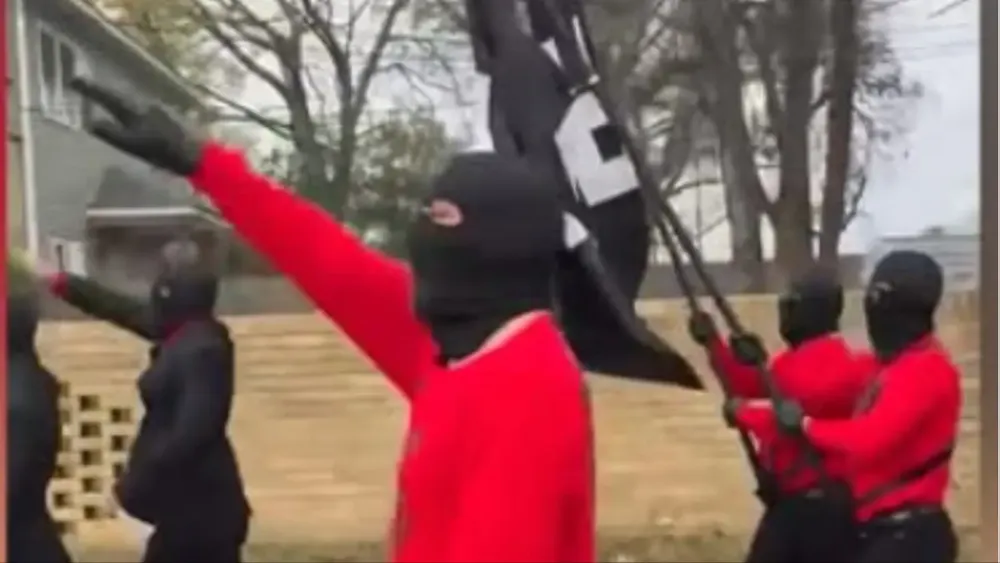
A group of white supremacists who were seen marching through Little Rock, Arkansas, in front of a historic civil rights landmark, were only cited with traffic offenses, despite local leaders and community members branding them as a threat to public safety. Police say that 22 individuals reportedly belonging to the Blood Tribe faction of neo-Nazis drove from out of state to Arkansas, where they marched in front of the state capitol and Little Rock Central High School, the first school in the city to integrate Black students in 1957, three years after the landmark Brown v. Board of Education decision ruling public school segregation unconstitutional. A group of white supremacists marched in front of the state capitol and Little Rock Central High School, the first school in the city to integrate Black students in 1957. (Photo: Instagram/lrhn_caash) Photos and videos were posted on social media showing dozens of masked individuals clothed in bright red shirts and black pants, carrying flags featuring swastikas and marching through the city on Dec. 6. Local authorities say they "monitored" the group's activities during their visit to Little Rock. They saw them piling into a large, box-style rental truck to drive to the site of their next demonstration. ‘His Brain Is Not Right’: Caretaker’s Defense After Man with Rare Disorder Hurls Racial Slur at Black Man Only Fuels Outrage Little Rock Police called in the Arkansas State Police to carry out a traffic stop on the truck due to the large number of individuals and some reports that they may have been armed. View this post on Instagram A post shared by Voice Of The News (@lrhn_caash) When they stopped the truck on the interstate, they cited the driver, 36-year-old Zachary Platter of Indiana, then transported every group member to a highway exit where they released them and advised them to find lawful transportation. Police say they remained in the area to make sure the group "did not post an ongoing threat to public safety." The police response to the group's presence in the city became a talking point on social media, where accusations surfaced that authorities exercised a double standard. "If this had been a truckload of Black residents or Latino residents, the response would’ve been very different. IDs checked. Warrants run. Firearms scrutinized. Vehicles searched. Charges stacked up. Communities of color live under that reality every day," one Facebook post read. "Equal protection doesn’t mean soft handling for extremists with neo-Nazi flags. Equal protection means enforcing the same laws the same way, regardless of who’s breaking them." Others questioned why police allowed the group to pack into a rental truck and followed them around the city without enforcing proper safety laws. The NAACP Little Rock branch echoed the same questions about how police treated the group: "The decision by protest organizers to load more than twenty individuals into the cargo box of a U-Haul truck was reckless, illegal, and dangerous. Even more `troubling,` law enforcement officers allegedly observed the loading but did not immediately intervene. Instead, the truck was allowed to move through Little Rock without enforcement until outside intervention and public reporting prompted a response,” the statement read, per KHBS. According to Arkansas Code § 27-35-104, "No person shall ride on any vehicle or upon any portion of a vehicle, including the cargo area, that is not designed or intended for the use of passengers." In a statement to KATV, Little Rock Police said its department "remains unwavering in its commitment to protecting the constitutional rights of individuals' to lawfully assemble. However, the Department strongly condemns any group or individual espousing hate-based ideologies." Similar outcomes have taken place in other neo-Nazi marches across the country, where police didn't charge or cite the group members, but merely released them. In November 2024, police briefly detained and released a group of armed neo-Nazis who marched through the city of Columbus, even after reports surfaced that they assaulted locals. In February, another neo-Nazi group protested on a highway overpass leading to Lincoln Heights, Ohio, a historically Black community in the state. Police called their demonstration legal and brief, stated the group left on their own, and no action was taken. Days after that demonstration, a Kentucky man scattered hundreds of flyers laced with Ku Klux Klan propaganda in Lincoln Heights and several other Ohio towns. He was found guilty of littering during a bench trial and ordered to pay fines.