‘Predatory Scheme’: Black Former Students Sue American Airlines, Claim Fast-Track Pilot Program Was a Scam That Left Them in Debt and Career Limbo
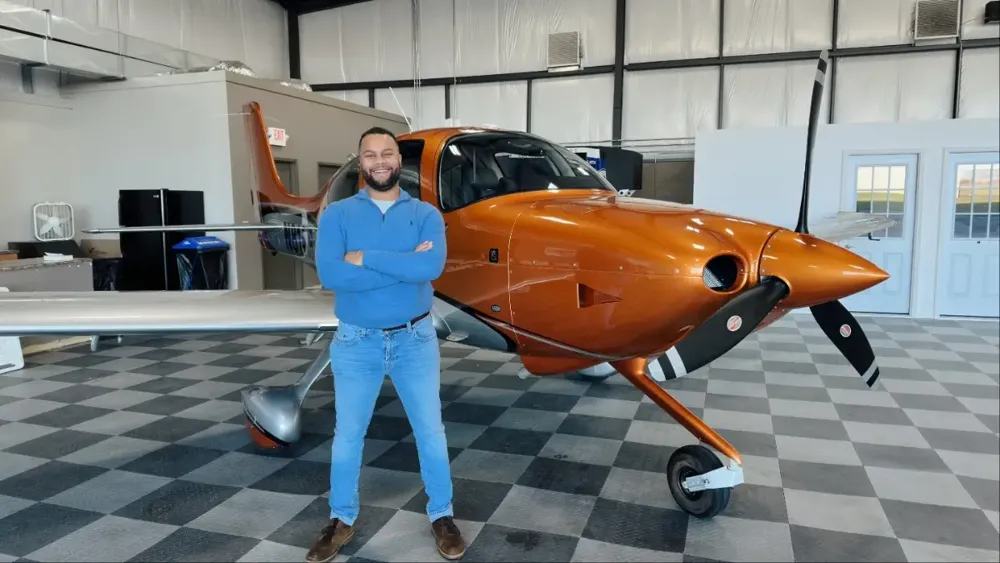
American Airlines launched a new flight training program in 2018 intended to provide people with no experience flying planes with a streamlined path to becoming commercial airline pilots within a year, and to increase diversity in the cockpit. Now 18 former student pilots, most of whom are Black, are suing the world’s largest airline and its training school, claiming they were conned into paying up to $130,000 for a falsely advertised program that didn’t deliver what it promised, and has left them in crushing debt and career limbo. Pilot Triston Sanderson at Midwest Corporate Air in Bellfountaine, Ohio, on Nov. 26, 2024, where he completed his remaining flight evaluations after leaving the American Airlines Cadet Academy (Photo: Kalena Charlene Holani via Sanford Heisler Sharp McKnight, LLP) The $36 million federal lawsuit filed on Dec. 16 in the Southern District of California (and obtained by Atlanta Black Star) says that the American Airlines Cadet Academy (AACA) promised to provide aspiring pilots with the training, financing and mentoring to become pilots ready to receive lucrative job offers from the airline’s regional carriers within 12 months, and to start earning income as flight instructors. Each of the 18 plaintiffs was allegedly told by recruiters and through advertising that the program’s $100,000 cost was all-inclusive, covering training, supplies, housing, and most living expenses. After 12 months, they’d have a private pilot license, and credentials including instrument ratings, commercial single- and multi-engine licenses, and certified flight instructor licenses. They claim they were told they would fly up to five days per week, receive consistent mentorship from American Airlines pilots, and be on a glide path to a “curated career track at American.” Considering that only about four percent of commercial airline pilots in the U.S. are Black, according to the U.S. Bureau of Labor Statistics, and it usually takes years of training to enter their ranks, American’s fast-track program was enticing to the plaintiffs. Most of them took out fat loans, quit their jobs, and moved close to one of America’s partner flight schools run by defendant Coast Flight Training and Management, which offered training in San Diego, Dallas, and San Marcos, Texas. The reality at the Cadet Academy “bore little resemblance to what Plaintiffs thought they had signed up for,” the complaint says. Completing the program took significantly longer than 12 months for most students, at a much greater cost than advertised. The flight schools did not have enough functional planes, instructors and facilities to offer flying time five days a week, and training was further hampered by high staff turnover. Only about 35 percent of all cadets who started the academy program completed it, the lawsuit claims, and only three cadets out of 81 finished within 12 months. And for the non-white cadets, who made up about half of each AACA cohort (people who started at the same time) from 2018 to 2023, the program offered blatant race discrimination and disparate treatment, the lawsuit says. The Black, Indian, Pakistani, and Brazilian plaintiffs contend their flight schools were hostile environments where instructors made racially derogatory statements such as calling one Black cadet’s brown skin “dirty” and her fingernails “ghetto.” Another instructor allegedly told a Black plaintiff that he had a “tiny brain” and dressed him down in front of his peers, telling him to “shut the f-ck up.” A Black female cadet was called “aggressive” and “hostile.” Former American Airlines Cadet Academy student pilots Kendall Anderson (left, in San Diego in October 2022) and Disney-Sean Grannell (right, in Olive Branch, Mississippi in August 2024) are now among 18 plaintiffs in a federal lawsuit against American Airlines, its training academy, and its affiliated credit union. (Photos: Kendall Anderson, Disney-Sean Grannell) The complaint alleges that the Cadet Academy also treated the plaintiffs less favorably than white students by providing them with less flying and training time than their white peers, grading them more harshly, labeling them as “trouble students,” and ultimately “railroading many non-white cadets into a dead-end remedial program” that led to their dismissal from the training program. While white students were offered flying time five or six days a week at optimal scheduling times, the complaint says non-white students were often grounded for days or weeks and were scheduled to fly during cloudy, stormy, or windy conditions, sometimes causing their sessions to be canceled.Triston Sanderson, 30, who is Black, was working as an accountant in Dallas when he applied to the program in 2021. He attended a Future Airline Pilot Association event later that year, where a Black pilot working for American told a group of aspiring aviators about his journey to the captain’s seat, the complaint says. Afterward, America’s Director of Recruiting, Brad Morrison, told the group that a pilot was earning more than $350,000 per year and said the Cadet Academy was “the best way to put themselves in his shoes quickly.” Sanderson took out a loan of $110,000 that he was told would cover the entire cost of the 12-month training program, during which he’d have a pilot mentor to guide him. His training took significantly longer and was more costly due to factors outside his control, including scheduling delays, poorly maintained planes and race-based bias from instructors and management, the complaint asserts. He was not assigned a mentor until his 11th month of training. Sanderson’s instructors held him to a higher, harsher standard than white cadets, giving him unsatisfactory marks for small mistakes but not doing so for white cadets, the lawsuit says. By July 2023, he was placed in the remedial training program, purportedly for failing an "checkride" evaluation and for canceling on training activities. But the academy did not put several white students who had failed multiple checkrides in the remedial program, the lawsuit says. In the end, 13 out of the 18 plaintiffs were placed in remedial training programs, which their attorneys argue “was a pathway to force cadets, particularly non-white cadets, out of the AACA after they had already paid tuition and incurred debt.” Other plaintiffs had to drop out of before they attained their licenses and flight ratings, because they couldn’t afford to rack up more loan and credit card debt. Some later obtained their flying credentials elsewhere, at additional expense. “The genesis of this program was a very laudable goal of diversifying the pilot profession, and we support that goal wholeheartedly,” Saba Bireda, an attorney representing the plaintiffs, told the San Diego Union-Tribune. “But the defendants … targeted people of color with this predatory scheme. … It really has left many of their lives and their careers in shambles.” The lawsuit accuses the defendants — American Airlines, Coast Flight Training, and American Airlines Federal Credit Union — of several types of fraud, false advertising and deceptive trade practices in violation of federal, California and Texas laws. The complaint alleges that the credit union violated the federal Equal Credit Opportunity Act and Racketeering Influenced Corruption Act (RICO) by conspiring with the airline to falsely represent that its loans covered 100% of the cost of the flight school, and that it engaged in acts of racial discrimination by targeting non-white people with misleading advertising and false claims about the training and credentials applicants would receive within 12 months. By the time the AAFCU started offering loans for the cadet academy in 2022, American Airlines and its affiliated credit union had access to several years of data regarding the AACA cadets' success rate, the time it took to complete the academy, and the actual cost, information material to cadets' decisions to enroll that it intentionally withheld, the lawsuit argues.The plaintiffs seek a jury trial to award $36 million in actual damages, including the amount they spent on flight training, moving to their flight school locations, living expenses, wages, or scholarship funds they gave up to attend the academy, as well as additional compensatory and punitive damages. American Airlines said in a statement that “through this program, we have sought to expand the pipeline of talented cadets from all over the country, many of whom now enjoy rewarding careers at American Airlines. We take seriously the concerns raised by this group of former cadets, but we believe the allegations are without merit.” American Airlines, the credit union and Coast Flight Training have 21 days after being served with the complaint to file a response.